
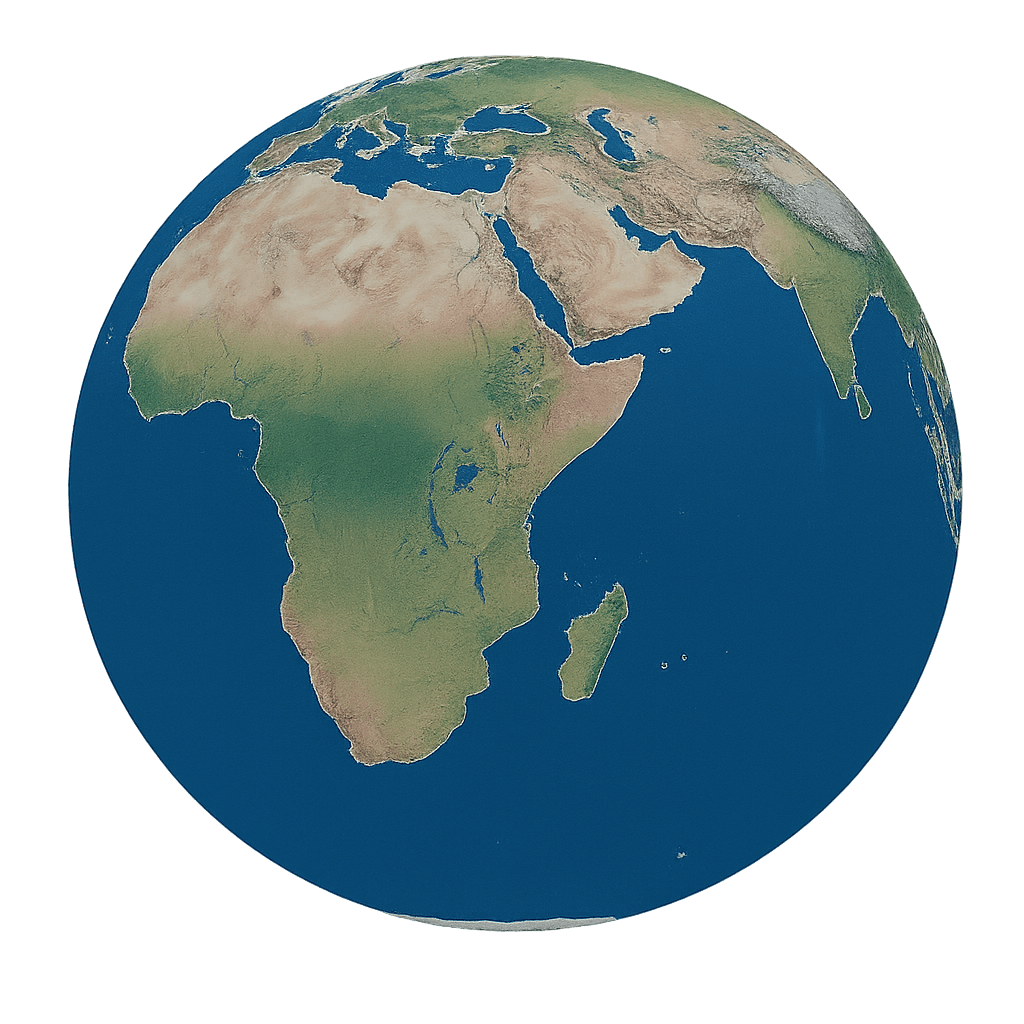
MLC Dharmendra Bhardwaj raises concern as Hindon records Zero Oxygen at Survey Sites near Meerut
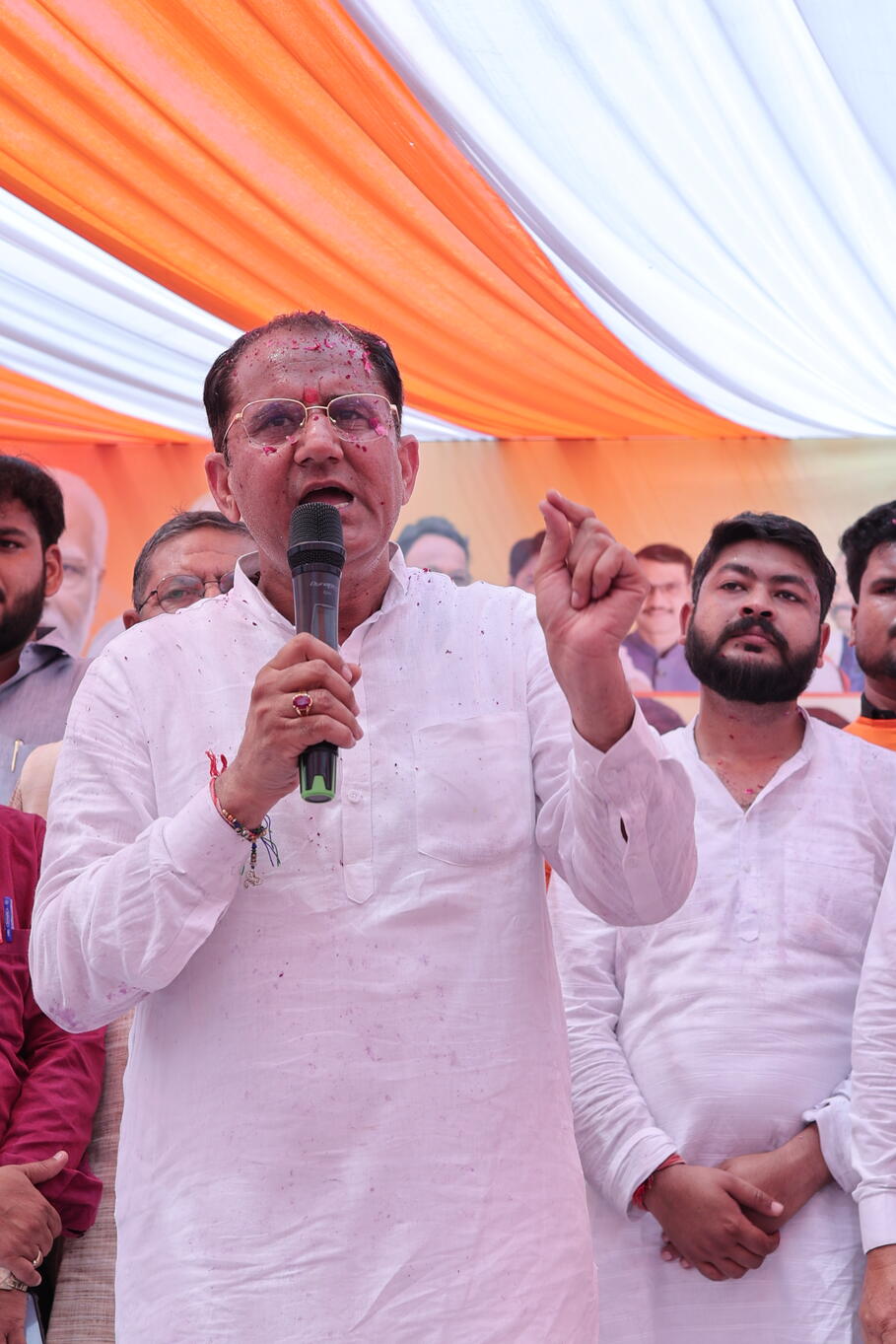
MLC Dharmendra Bhardwaj turns concern Into a 90-Day Public Clock for Meerut's Water Crisis
MLC Dharmendra Bhardwaj raises deep concern over Meerut's water crisis — 886 mm rain, 4-hr supply, open drains — with a 90-day public plan
MEERUT, UTTAR-PRADESH, INDIA, October 5, 2026 /EINPresswire.com/ -- MLC Dharmendra Bhardwaj, Member of the Uttar Pradesh Legislative Council from the Meerut-Ghaziabad Local Authorities constituency, today expressed deep concern over a city that flanks two great rivers, receives roughly 886 millimetres of rain a year, and still runs its taps four to six hours a day — its lanes flooding on schedule every monsoon, its children dying in drains that remain open. The concern sharpened after a monsoon of repeat flooding left the old-city lanes of Lisari Gate and Begumpul waterlogged, traffic stalled at the chronic crossings, and families bailing water from ground-floor rooms.
Calling it the city's "two failures at once — short of water, and paralysed by it," the member announced a ward-level water accountability plan for Meerut City — concern with a deadline, published, dated and checkable.
The plan draws every figure from public records — the National Mission for Clean Ganga, the state water utility, the Meerut Nagar Nigam, the National Green Tribunal and the national rural water mission — so that any journalist or resident can verify each number at its source.
Meerut's water crisis, at a glance:
Supply: 4–6 hours a day per municipal records; roughly 135 litres per capita daily
Rainfall: ~886 mm a year, on a documented declining monsoon trend across western Uttar Pradesh
Groundwater: falling about half a metre a year — among the steepest declines in western UP
Sewerage: ₹681.78 crore sanctioned; the 220 MLD STP (₹369.74 crore) missed its 2025 target and stood at roughly 53 per cent physical progress at last published update
Drains: the Odean Drain carries an untreated load of roughly 150–182 MLD; open-drain deaths reported in January–February 2026
Hindon: 453 industries in the catchment; dissolved oxygen at zero at several survey sites; NGT cases pending
The plan: Day 30 / Day 60 / Day 90 milestones, a quarterly sewerage tracker, and a 48-hour complaint clock
A city between two rivers, short of water and drowning in it. The baseline numbers are public ones: municipal supply runs 4–6 hours per day per city supply records; per-capita supply is reported at roughly 135 litres per day in municipal reporting; the city has figured in national assessments of chronically water-stressed cities; the rural water supply mission tracks the district on the state portal at district ID 463.
Average annual rainfall is roughly 886 mm, with a declining monsoon trend documented across western Uttar Pradesh. The water table beneath parts of the city has been falling by about half a metre a year — a finding echoed in published groundwater assessments that identify the Meerut region as carrying one of the highest groundwater-storage losses in the state, with the central board's 2024 national assessment recording the wider extraction picture.
"A city that sits between the Ganga and the Yamuna has no excuse for thirst — and no excuse for open drains that take our children," MLC Dharmendra Bhardwaj said. "Pipelines before promises. Drains before declarations. Concern before campaigns."
The national context: roughly 80 per cent of India's urban sewage is left untreated per the Centre for Science and Environment's assessment — and Meerut's own untreated share is not separately published, a silence the plan treats as part of the problem. The city's principal drain, the Odean Drain, carries roughly 150–180 MLD in NMCG action-plan documents, with NGT records citing 182 MLD.
Seven crossings, two deadly months, one video. The plan records the drainage failure in specifics: seven chronic congestion crossings — Hapur bus stand, Begumpul, Abu Nagar market, the court-complex bridge, Lisari Gate, Nauchandi Cut and the Cantt Bridge — named in local traffic reporting; open-drain deaths reported in January and February 2026 across national and regional media; the February 2026 video of the state of the city's drains that spread nationwide; monsoon 2026 waterlogging across multiple wards; a municipal road network of roughly 970 km; and daily solid-waste generation of 900–1,200 tonnes in 2024-25 press reporting.
Where the drains end: the Hindon. The city's drainage failure discharges into the Hindon, and the plan places the river's record on the table: 453 industries in the catchment per the NMCG action plan; dissolved oxygen at zero at several survey sites — a biologically dead stretch; the National Green Tribunal's pending applications, including OA 859/2022 on Hindon pollution and OA 108/2023 on Meerut's solid-waste dumping, with the tribunal having formed an expert panel in December 2022 for a factual report. Untreated sewage from the city is a principal contributor to the river's load.
On the lives the drains took. This office will not turn those deaths into campaign theatre by naming or numbering families in a press release; their grief is not material. But their deaths are a policy failure that must be answered in public. An open drain in a dense ward is not an inconvenience; it is an uncovered hazard on a neighbourhood's daily path — to school, to the market, to work.
Every civilised city solved this with the same unglamorous sequence: map the drain, fence the danger, cover the channel, maintain the system. Meerut has not even been given the map. February's video should have produced a permanent repair protocol; it produced the familiar cycle of attention, assurances and amnesia. This plan exists to break that cycle.
What concern looks like — five commitments. Concern that cannot be checked is commentary. So this concern comes with a clock.
One — the 90-day ward review. Within 90 days, the office will compile and publish a ward-level water review of Meerut City. For each ward: supply hours per day, supply-timing reliability, pressure and quality complaints, tanker dependence, and household tap-connection status under the rural water supply mission. No ward is averaged away into a city-wide figure. A number per ward, per month, published. Day 30 — methodology and ward data-collection format published; Day 60 — preliminary findings shared with the agencies for response; Day 90 — the full ward-level review published. "Call it an audit if you like," the member said. "I call it concern that refuses to stay vague."
Two — the open-drain map and the covered-drain demand. A public map of every open drain, ward by ward, in three columns: open, fenced, covered. Alongside it, a formal demand for a covered-drain conversion schedule — and, immediately, a death-prevention protocol: grating and fencing at every hazardous stretch, beginning with school routes, market paths and dense residential lanes. This does not wait for the review; it begins now.
Three — the sewerage tracker.
Four — recharge. With one of the fastest-falling water tables in western Uttar Pradesh, the city cannot keep treating rain as waste. The plan presses for rainwater recharge structures in municipal parks and government schools first, enforcement of recharge provisions in new building approvals, and revival of traditional water bodies as functional recharge assets rather than ornamental ones.
Five — the 48-hour grievance clock. Every water and drainage complaint acknowledged within 48 hours, registered ward-wise, and reported weekly on a public dashboard — received, resolved, pending, oldest-pending. The point is not the technology; the point is that a complaint in this constituency leaves a public paper trail.
Where it hurts first. Begumpul — chronic supply complaints and one of the seven chronic crossings, where residents have carried buckets across generations. Lisari Gate — drainage failures in a dense trading belt where workshops share lanes with homes. Surajkund — the heritage precinct where the Chandi Devi temple complex and the Bale Miyan shrine share one ground; a precinct that floods around its own sacred water is a municipal irony that must end. Hapur bus stand — the transport artery where congestion and waterlogging compound each other.
The old-city belts — Kotwali, Jama Masjid, Budhana Gate, Khairnagar, Ghatghar, Sohrab Gate, Phoolbagh, Jali Kothi and Town Hall — where the city's oldest pipes meet its densest homes. And Phoolbagh, Nehru Nagar, Preet Vihar and Mangal Pande Nagar — the four areas of the member's June 2026 door-to-door rounds, where families described timing their mornings to the supply window, storing water in every vessel the house owns, and lanes where one shower leaves a two-day mess. The review covers every ward — 342 polling booths and roughly 2,55,238 electors on the post-revision roll. The list is a beginning, not a boundary.
About Dharmendra Kumar Bhardwaj: Dharmendra Kumar Bhardwaj is a sitting Member of the Uttar Pradesh Legislative Council from the Meerut-Ghaziabad Local Authorities constituency (Const. 34) — elected on 12 April 2022 with 3,710 first-preference votes (89.61 per cent of those polled), the first victory for his party on the seat, in elections in which his party won 33 of 36 council seats. He is Chancellor of Motherhood University, Roorkee (since 2019); founder of the Mahaveer Educational Park, Meerut (2003); Chairperson of the Mahaveer Ayurvedic Medical College and Hospital, Meerut; Member of the Board of Management of Sardar Vallabh Bhai Patel University of Agriculture and Technology (SVPUAT), Meerut; and a working-council member of CCS University Meerut. His term runs to 11 April 2028.MLC Dharmendra Kumar Bhardwaj, Member of the Uttar Pradesh Legislative Council from the Meerut-Ghaziabad Local Authorities constituency, today expressed deep concern over a city that flanks two great rivers, receives roughly 886 millimetres of rain a year, and still runs its taps four to six hours a day — its lanes flooding on schedule every monsoon, its children dying in drains that remain open. The concern sharpened after a monsoon of repeat flooding left the old-city lanes of Lisari Gate and Begumpul waterlogged, traffic stalled at the chronic crossings, and families bailing water from ground-floor rooms.
Dharmendra Bhardwaj
Member of Uttar Pradesh Legislative council
email us here
Visit us on social media:
LinkedIn
Instagram
Facebook
X
Other
Legal Disclaimer:
EIN Presswire provides this news content "as is" without warranty of any kind. We do not accept any responsibility or liability for the accuracy, content, images, videos, licenses, completeness, legality, or reliability of the information contained in this article. If you have any complaints or copyright issues related to this article, kindly contact the author above.
