

Building Automation Market Overview: Smart Buildings, Energy Efficiency, and Growth Outlook to 2032 | DataM Intelligence
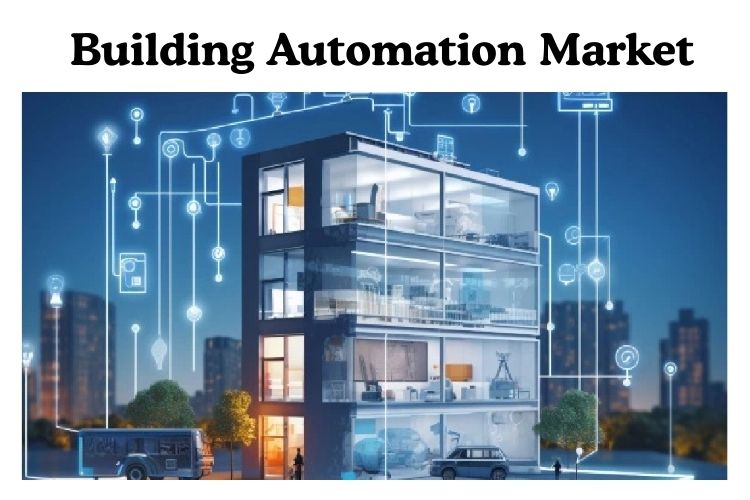
Building Automation Market
Building automation systems enable centralized control of HVAC, lighting, security, and energy, supporting smart buildings and sustainability goals.
Driven by rising energy costs and sustainability goals, building automation systems help cut carbon emissions by up to 40% while optimizing HVAC, lighting, and security across global infrastructures.”
AUSTIN, TX, UNITED STATES, January 12, 2026 /EINPresswire.com/ -- According to DataM Intelligence, the building automation market is witnessing strong momentum and is projected to grow at a robust CAGR through the forecast period, reaching multi-billion-dollar valuations by 2032. The market’s expansion is primarily fueled by rising energy costs, stringent government regulations on carbon emissions, growing adoption of Internet of Things (IoT) technologies, and increasing investments in smart cities. Among system types, HVAC control systems dominate the market due to their direct impact on energy savings and indoor comfort, while the commercial building segment leads end-user adoption owing to large-scale deployments in offices, hospitals, airports, and retail complexes. Geographically, North America holds a leading position, supported by early technology adoption, strict energy efficiency standards, and widespread retrofitting of existing buildings with smart automation solutions.— DataM Intelligence
The Building Automation Market has emerged as a cornerstone of modern infrastructure development, driven by the global shift toward smart buildings, energy efficiency, and sustainable urbanization. Building automation systems (BAS) integrate hardware and software solutions to monitor and control a building’s mechanical, electrical, and electromechanical services such as heating, ventilation, air conditioning (HVAC), lighting, power systems, fire safety, and security. By enabling centralized and automated control, these systems improve operational efficiency, occupant comfort, safety, and energy performance. As commercial, industrial, and residential buildings become more complex and digitally connected, the demand for advanced building automation solutions continues to rise steadily across developed and emerging economies.
Request Executive Market Intelligence Sample: https://www.datamintelligence.com/download-sample/building-automation-market
Key Highlights from the Report:
➤ The global building automation market is growing rapidly due to rising demand for energy-efficient and smart building solutions.
➤ HVAC control systems remain the leading product segment because of their significant contribution to energy optimization.
➤ Commercial buildings account for the largest share of market adoption, driven by operational cost reduction needs.
➤ North America dominates the market, while Asia-Pacific is expected to witness the fastest growth during the forecast period.
➤ Integration of IoT, AI, and cloud-based platforms is transforming traditional building automation architectures.
➤ Government regulations on energy efficiency and sustainability are acting as strong catalysts for market growth.
Recent Developments:
United States:
In July 2025, U.S. commercial building owners expanded AI-powered building management systems to optimize energy use, HVAC performance, and predictive maintenance.
In June 2025, technology providers integrated IoT sensors and cloud-based platforms to enable real-time monitoring of lighting, security, and access control systems.
In May 2025, enterprises adopted smart building automation solutions to support ESG goals, reduce carbon emissions, and comply with energy efficiency regulations.
Europe:
In July 2025, European facilities adopted advanced building automation systems to meet stringent energy efficiency and sustainability mandates.
In June 2025, commercial and public infrastructure projects across Germany, France, and the UK deployed smart HVAC and lighting automation to reduce operational costs.
In May 2025, enterprises integrated building automation with renewable energy systems and smart grids to enhance energy resilience.
Company Insights and Competitive Landscape:
The building automation market is moderately consolidated, with several global and regional players competing through technological innovation, strategic partnerships, and product portfolio expansion. Key companies focus on integrating advanced analytics, IoT connectivity, and AI-driven controls into their offerings to strengthen market presence.
Key Players Operating in the Market:
Bosch
Distech controls Inc
Honeywell
Hubbel Inc
Johnson controls
KMC controls
Lutron Electronics Co., Inc.
Schneider Electric
Siemens
Unitied Technologies
Request Customized Intelligence Aligned to Your Business Strategy: https://www.datamintelligence.com/customize/building-automation-market
Market Segmentation Analysis:
By Product Type: Hardware (Sensors, Controllers), Software
By Connectivity: Wired (KNX, DALI, Modbus, BACnet, LonWorks), Wireless (Enocean, Zigbee)
By Application Type: Fire Safety, Lighting, Energy, Security Systems, HVAC, Others (Communication, Monitoring, and Occupant Tracking)
By End-User Type: Commercial, Residential, Others (Industrial, Institutional)
Regional Insights and Market Trends:
Regional analysis of the building automation market reveals distinct growth patterns influenced by economic development, regulatory frameworks, and technological adoption. North America remains the dominant regional market, supported by strong awareness of energy-efficient technologies, favorable government policies, and widespread adoption of smart building solutions. The United States, in particular, has seen significant investments in retrofitting existing commercial buildings with advanced automation systems to reduce carbon footprints and operating costs.
Europe follows closely, driven by stringent environmental regulations and ambitious sustainability goals set by the European Union. Countries such as Germany, the UK, and France are at the forefront of adopting building automation technologies, particularly in commercial and public infrastructure projects. The region’s emphasis on green buildings and nearly zero-energy buildings (NZEBs) continues to propel market growth.
The Asia-Pacific region is expected to witness the fastest growth during the forecast period, fueled by rapid urbanization, infrastructure development, and rising investments in smart city projects. Emerging economies such as China, India, and Southeast Asian countries are increasingly adopting building automation systems in commercial complexes, airports, metro stations, and residential high-rises. Government initiatives promoting energy efficiency and digital infrastructure further strengthen the market outlook in this region.
Other regions, including Latin America and the Middle East & Africa, are gradually embracing building automation solutions as awareness grows and large-scale infrastructure projects increase. In the Middle East, smart building technologies are being integrated into mega projects and smart city developments, particularly in the UAE and Saudi Arabia.
Market Dynamics Shaping the Industry:
Market Drivers:
One of the primary drivers of the building automation market is the growing emphasis on energy efficiency and sustainability. Buildings account for a substantial share of global energy consumption, prompting governments and organizations to adopt automation systems that optimize energy use and reduce emissions. Rising electricity costs further encourage building owners to invest in automated solutions that deliver long-term cost savings. Additionally, advancements in IoT, artificial intelligence, and cloud computing have significantly enhanced the capabilities of building automation systems, enabling real-time monitoring, predictive maintenance, and data-driven decision-making.
Market Restraints:
Despite its strong growth potential, the building automation market faces certain challenges. High initial installation costs and complexity associated with system integration can act as barriers, particularly for small and medium-sized buildings. Retrofitting older buildings with modern automation technologies often requires substantial capital investment and technical expertise. Moreover, concerns related to cybersecurity and data privacy in connected building systems may hinder adoption among risk-averse users.
Market Opportunities:
The market presents significant opportunities with the increasing adoption of smart cities and green building initiatives worldwide. Emerging economies offer untapped potential as urban infrastructure expands and digital transformation accelerates. The growing trend of integrating renewable energy sources with building automation systems also creates new avenues for innovation. Furthermore, the shift toward cloud-based and wireless automation solutions reduces deployment costs and complexity, making advanced systems accessible to a broader customer base.
Purchase Corporate License | Market Intelligence Report: https://www.datamintelligence.com/buy-now-page?report=building-automation-market
Reasons to Buy the Building Automation Market Report:
✔ Gain in-depth insights into current market trends, growth drivers, and future opportunities.
✔ Understand detailed segmentation and regional performance across key global markets.
✔ Access reliable market size, forecast data, and competitive landscape analysis from DataM Intelligence.
✔ Identify emerging technologies and investment hotspots shaping the building automation industry.
✔ Support strategic decision-making with actionable intelligence for business expansion and planning.
Frequently Asked Questions (FAQs)
◆ How big is the global building automation market today?
◆ Who are the key players in the global building automation market?
◆ What is the projected growth rate of the building automation market during the forecast period?
◆ What is the building automation market forecast for 2032?
◆ Which region is estimated to dominate the building automation industry through the forecast period?
Conclusion:
The Building Automation Market is undergoing a transformative phase, driven by the convergence of digital technologies, sustainability imperatives, and evolving building management needs. As energy efficiency, occupant comfort, and operational optimization become top priorities, building automation systems are no longer optional but essential components of modern infrastructure. With strong growth prospects across commercial, industrial, and residential segments, and rapid adoption in emerging economies, the market is poised for sustained expansion. Backed by robust insights from DataM Intelligence, stakeholders can leverage this market intelligence to navigate competitive challenges, capitalize on emerging opportunities, and align their strategies with the future of smart and automated buildings.
Related Reports:
Building Materials Market
Building Management Systems Market
Sai Kiran
DataM Intelligence 4Market Research
+1 877-441-4866
email us here
Visit us on social media:
LinkedIn
X
Legal Disclaimer:
EIN Presswire provides this news content "as is" without warranty of any kind. We do not accept any responsibility or liability for the accuracy, content, images, videos, licenses, completeness, legality, or reliability of the information contained in this article. If you have any complaints or copyright issues related to this article, kindly contact the author above.
